Wolt pays couriers per delivery, and the per-order rate in cities like Helsinki and Budapest can sit anywhere from €3 to €7 depending on distance, vehicle type, and time of day.
Most Wolt delivery partner guides spend 90% of their words on how to download an app and upload your ID. The part that decides whether this gig is worth your Tuesday evening gets two sentences at the bottom.



This one is for the person weighing Wolt against a part-time restaurant shift or another delivery platform. You want real numbers, real friction points, and an honest read on whether the flexibility is worth the trade-offs.
What Does a Wolt Delivery Partner Do Exactly?
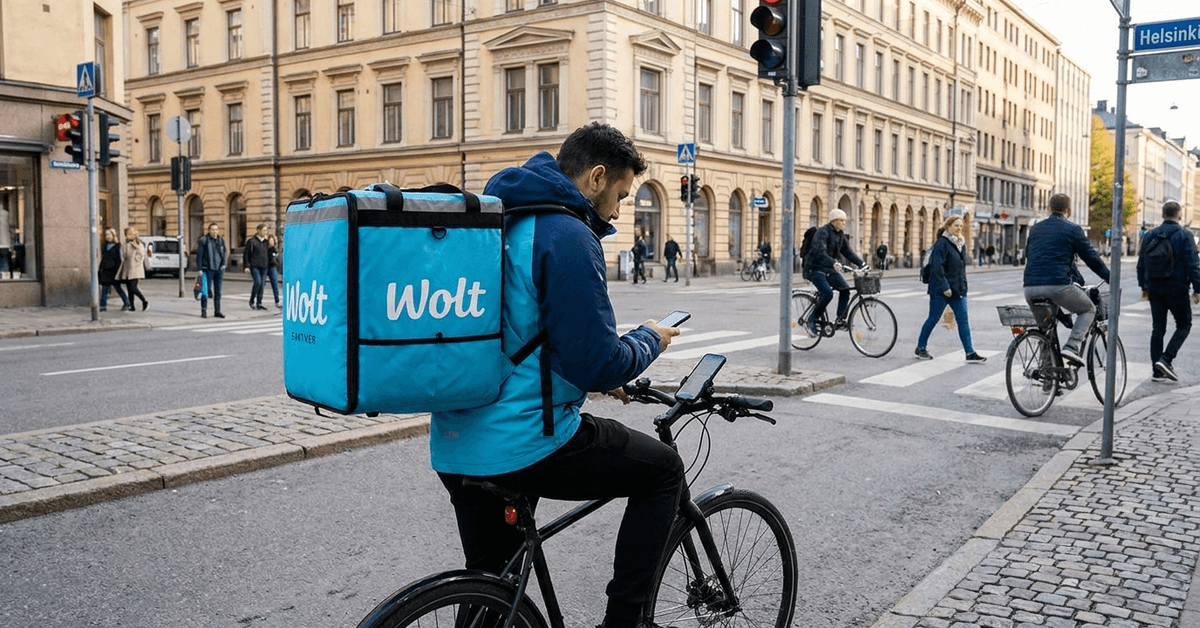
A Wolt delivery partner is an independent courier who picks up food orders from restaurants and delivers them to customers using the Wolt Partner app. You accept an order, ride or drive to the restaurant, grab the bag, and drop it off. That loop repeats.
How Orders Show Up
The app pushes a notification with the restaurant name, pickup address, and drop-off location. GPS routing is built in, so you don't need to memorize streets on day one.
You can see the estimated distance before accepting. Declining an order won't get you penalized in most Wolt markets, though consistently skipping tasks may reduce how often the algorithm sends you new ones.
Choosing Your Own Hours
Partners pick when to go online. Some Wolt cities use a shift booking system where you reserve time slots in advance. Others let you tap "Go Online" whenever you feel like working.
The distinction matters. Shift-based cities give more predictable order flow during your reserved window. Instant-login cities offer more spontaneity but less consistency during slow hours.
Wolt Delivery Partner Requirements: City-by-City Differences
Every Wolt market sets its own eligibility rules, but the baseline looks similar across Europe. Minimum age is 18 in most cities, though a few regions push it to 21 for motorized vehicles.
ID, Work Authorization, and Background Checks
You need a government-issued ID and legal authorization to work in the country. Wolt runs background checks in some markets (Finland, Sweden) but not all. The check timeline ranges from 48 hours to two weeks depending on your location.
Vehicle and Gear
Wolt accepts bicycles, e-bikes, scooters, and cars. The vehicle you choose changes your earning potential: car couriers cover longer distances and sometimes get higher-paying orders, but fuel and maintenance eat into margins.
A thermal delivery bag is mandatory. Wolt sells branded ones, but third-party bags that meet size requirements work too. Your smartphone needs to run the Wolt Partner app on iOS 15+ or Android 10+.
The Wolt Application Process Step by Step
Signing up takes less time than most people expect. The bottleneck is document verification, not the form itself.
Registration and Document Upload
Go to Wolt's partner signup page for your city. You'll enter your name, phone number, email, and vehicle type. Then upload your ID, a selfie for identity matching, and your driver's license if you're using a motorized vehicle.
I'd recommend having all documents ready as image files on your phone before starting. Couriers who upload blurry photos or cropped IDs report delays of a week or more on verification.
Onboarding Session
Wolt requires either an in-person orientation or a video tutorial depending on the city. The content covers app navigation, order handling, and food safety basics. It runs about 30 to 45 minutes.
Account Activation
Once documents clear and onboarding is done, your account goes live. You'll get a notification, and from that point you can book shifts or go online immediately.
The full process from application to first delivery typically takes 5 to 14 days. Cities with higher courier demand tend to process applications faster.
How Much Do Wolt Partners Earn Per Delivery?
Wolt uses a per-task payment model. Each completed delivery earns a base fee plus distance compensation. Rates vary by city, vehicle type, and time of day.
Peak-hour bonuses kick in during lunch (11:00 to 13:00) and dinner (18:00 to 21:00) in most European markets. Weekend evenings tend to pay the highest multipliers.
A Realistic Weekly Earning Range
I think the widespread advice to "just work peak hours" oversimplifies things, because peak slots in shift-based cities like Helsinki fill up days in advance. New couriers with low priority scores often can't book the lucrative Friday 18:00 to 21:00 window for their first several weeks.
That changes the math. If you can only get Tuesday lunch shifts and Wednesday afternoons during your first month, your weekly income will look nothing like the optimistic figures Wolt's recruitment page suggests.
A more honest framing: experienced Wolt couriers working 20 to 25 hours per week during consistent peak windows report earning roughly €400 to €700 per week in cities like Stockholm and Budapest. New partners during off-peak windows may see half that.
What Eats Into Your Earnings
Fuel, phone data, vehicle wear, and thermal bag replacement are all on you. Wolt doesn't reimburse expenses. For bicycle couriers, the cost overhead is low. For car-based partners, fuel alone can shave 15% to 25% off gross earnings.
Here are the costs most new Wolt couriers underestimate:
- Phone data plan: constant GPS and app usage burns through mobile data faster than casual use
- Thermal bag replacement: cheap bags lose insulation within two to three months of daily use
- Vehicle maintenance: tire patches, brake pads, and chain replacements add up for bike couriers doing 30+ km daily
- Tax set-aside: as a self-employed contractor, you owe income tax on every euro earned
Taxes and Legal Status for Wolt Couriers
Wolt classifies partners as independent contractors in most European markets. You are self-employed, not an employee.
That means no employer-paid health insurance, no paid sick days, and no pension contributions unless you arrange them yourself. You file your own taxes and track your own income.
What to Set Aside for Taxes
Tax rates on self-employment income vary by country. A safe general rule: set aside 20% to 30% of gross Wolt earnings in a separate account until you file.
| Country | Self-Employment Tax Rate (Approx.) | Tax Filing Frequency |
|---|---|---|
| Finland | 20% to 30% on net income | Annually |
| Sweden | ~30% including social contributions | Annually |
| Hungary | 13% social + flat income tax | Quarterly |
| Latvia | Micro-enterprise tax ~25% | Quarterly |
These are approximate ranges. Check your country's tax authority website or speak with a local accountant for exact obligations.
Insurance You Might Need
Some cities require liability insurance for delivery couriers. Others don't. Wolt's terms usually state that partners are responsible for their own insurance coverage.
If you're delivering by car or motorized scooter, commercial vehicle insurance may be required in your jurisdiction. Standard personal auto insurance often excludes delivery work. This gap catches new couriers off guard.
Where Wolt Operates: Best Cities for New Partners
Wolt runs in over 20 countries, but courier demand and earning potential differ sharply between markets. The busiest cities for Wolt partner work include:
- Helsinki: Wolt's home market, dense restaurant coverage, high order volume year-round
- Stockholm: strong demand, higher per-delivery rates, competitive shift booking
- Budapest: lower cost of living makes Wolt earnings stretch further relative to expenses
- Vilnius and Riga: growing markets with less courier saturation than Nordic capitals
Smaller cities can surprise you during university semesters or local festivals when order volume spikes. But baseline demand in cities under 200,000 population tends to be inconsistent.
Check Wolt's careers page for current partner openings in your city.
Questions People Ask About Wolt Delivery Partners
These come up constantly in courier forums and search results. Quick answers below.
- Q: Can I deliver for Wolt and another platform at the same time?
Wolt doesn't prohibit multi-apping in most markets. Many couriers run Wolt and Uber Eats simultaneously, accepting whichever order pays better. Just be careful about delivery time commitments on both apps. - Q: Do I need a special license to deliver food for Wolt?
A standard driver's license covers motorized deliveries in most EU countries. Some cities require a food handler's certificate or a micro-business registration. Your local Wolt partner page lists city-specific requirements. - Q: How long does the Wolt partner application take?
The form takes about 10 to 15 minutes. Document verification and onboarding add another 5 to 14 days depending on your city's processing speed. - Q: Does Wolt provide the delivery bag?
Wolt sells branded thermal bags, but they're not always free. Some cities include one in the onboarding kit. Others charge €15 to €30. Third-party bags that meet Wolt's size specs work fine. - Q: Can I switch my vehicle type after signing up?
Yes, but you'll need to update your vehicle information in the app and possibly submit new documents. Switching from bicycle to car, for example, requires a valid driver's license upload and may trigger a new background check.
Conclusion
Wolt delivery work fits people who genuinely value schedule control over income stability. The signup process is simple, but the earning curve takes patience and city knowledge.
Tax obligations and gear costs are your responsibility from day one, so plan for them early. If you want a side income that lets you move and stay flexible, it's worth a serious test run.